
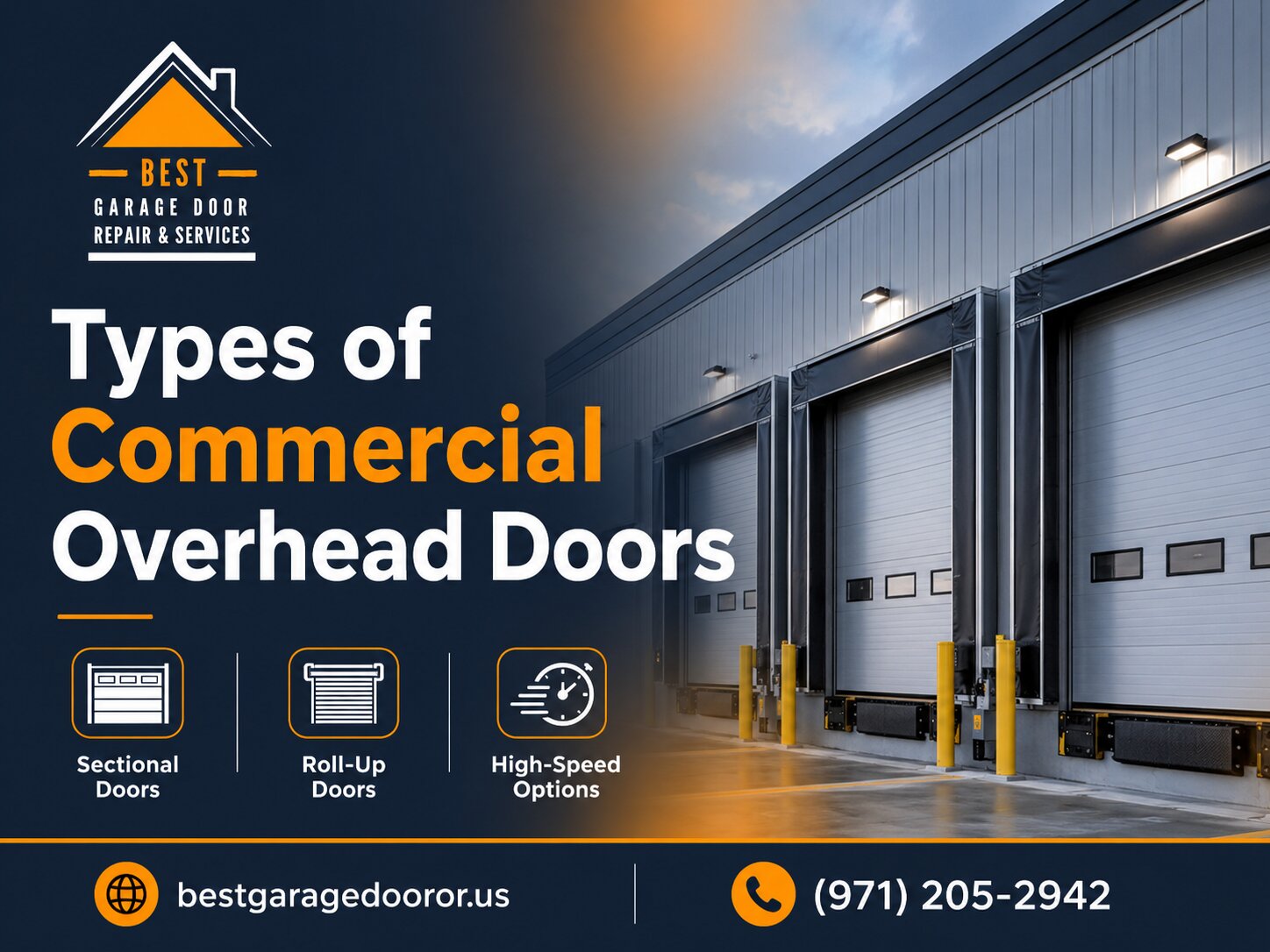
Selecting the right commercial overhead door is critical for facility security, operational efficiency, and energy management. Commercial overhead doors differ significantly in design, materials, opening mechanisms, and insulation properties.
Here is a breakdown of the primary types of commercial overhead doors, their core applications, and key selection criteria.
Quick Summary: Commercial Door Types at a Glance
Sectional Steel Doors Best Suited For: Warehouses, auto shops, fire stations. Key Advantages: High insulation (R-value), customizable panel designs.
Rolling Steel Doors Best Suited For: High-security facilities, tight overhead spaces. Key Advantages: Compact footprint, heavy-duty durability.
High-Speed Doors Best Suited For: Cold storage, high-traffic logistics hubs. Key Advantages: Rapid cycle times, climate control efficiency.
Fire-Rated Doors Best Suited For: Manufacturing plants, chemical storage. Key Advantages: Automatic closure during fire alarms, code compliance.
Full-View Aluminum Best Suited For: Auto dealerships, restaurants, retail storefronts. Key Advantages: Maximum natural light, modern visual aesthetics.
-
Commercial Sectional Steel Doors
Commercial sectional doors consist of panel sections hinged together. As the door opens, it travels vertically along tracks before laying flat parallel to the ceiling.
Material Options: Available in heavy-gauge steel, aluminum, or insulated sandwich panels with a polyurethane or polystyrene core. Thermal Performance: High R-value insulation options make sectional doors ideal for climate-controlled buildings. Common Uses: Loading docks, maintenance facilities, and municipal buildings where ceiling clearance is readily available.
-
Rolling Steel Doors (Coiling Doors)
Rolling doors feature interlocking horizontal steel slats that coil around a drum mounted directly above the door opening.
Space Saving: Because they coil overhead rather than sliding along tracks, rolling doors preserve interior ceiling space for lighting, HVAC ductwork, and cranes. Security & Durability: Constructed from galvanized steel, stainless steel, or aluminum, offering superior strength against forced entry and severe weather. Common Uses: Warehouses, security grilles for retail stores, storage facilities, and industrial bays.
-
High-Speed Doors
High-speed doors operate at speeds up to 100 inches per second. They are designed for fast-paced operational environments where rapid opening and closing cycles are essential.
Energy Savings: Fast cycle times minimize air exchange, reducing heating and cooling costs in temperature-sensitive zones. Durable Construction: Available in flexible fabric or rigid metal slat options, often featuring soft-bottom edges to prevent collision damage. Common Uses: Cold storage, food processing plants, pharmaceutical facilities, and busy distribution warehouses.
-
Fire-Rated Overhead Doors
Fire-rated doors are specialized rolling steel doors engineered to automatically close when a fire alarm is triggered or when thermal links melt due to high heat.
Code Compliance: Built to meet strict UL (Underwriters Laboratories) and NFPA standards to prevent the spread of fire and smoke. Custom Integration: Can be connected to a facility’s fire alarm system for automated release. Common Uses: Wall openings separating distinct facility zones, industrial plants, and commercial kitchens.
-
Full-View Aluminum Doors
Full-view doors combine durable aluminum framing with large glass panels to provide maximum visibility and light infiltration.
Design Flexibility: Glass options include tempered, insulated, tinted, or frosted glass paired with anodized or powder-coated frames. Aesthetic Appeal: Delivers a sleek modern look while maintaining overhead operation. Common Uses: Automotive dealerships, commercial fire stations, restaurant patio enclosures, and retail spaces.
How to Choose the Right Commercial Overhead Door
When evaluating commercial overhead doors, prioritize these key parameters:
-
Cycle Frequency: Standard doors handle 10,000 to 20,000 cycles. High-cycle or high-speed doors are necessary for openings operating constantly.
-
Thermal Requirements: Check the overall U-factor and R-value to ensure compliance with local building energy codes.
-
Clearance Restrictions: Measure headroom, side room, and backroom clearance to determine whether a sectional (track-based) or coiling door fits the space.






Leave A Comment