
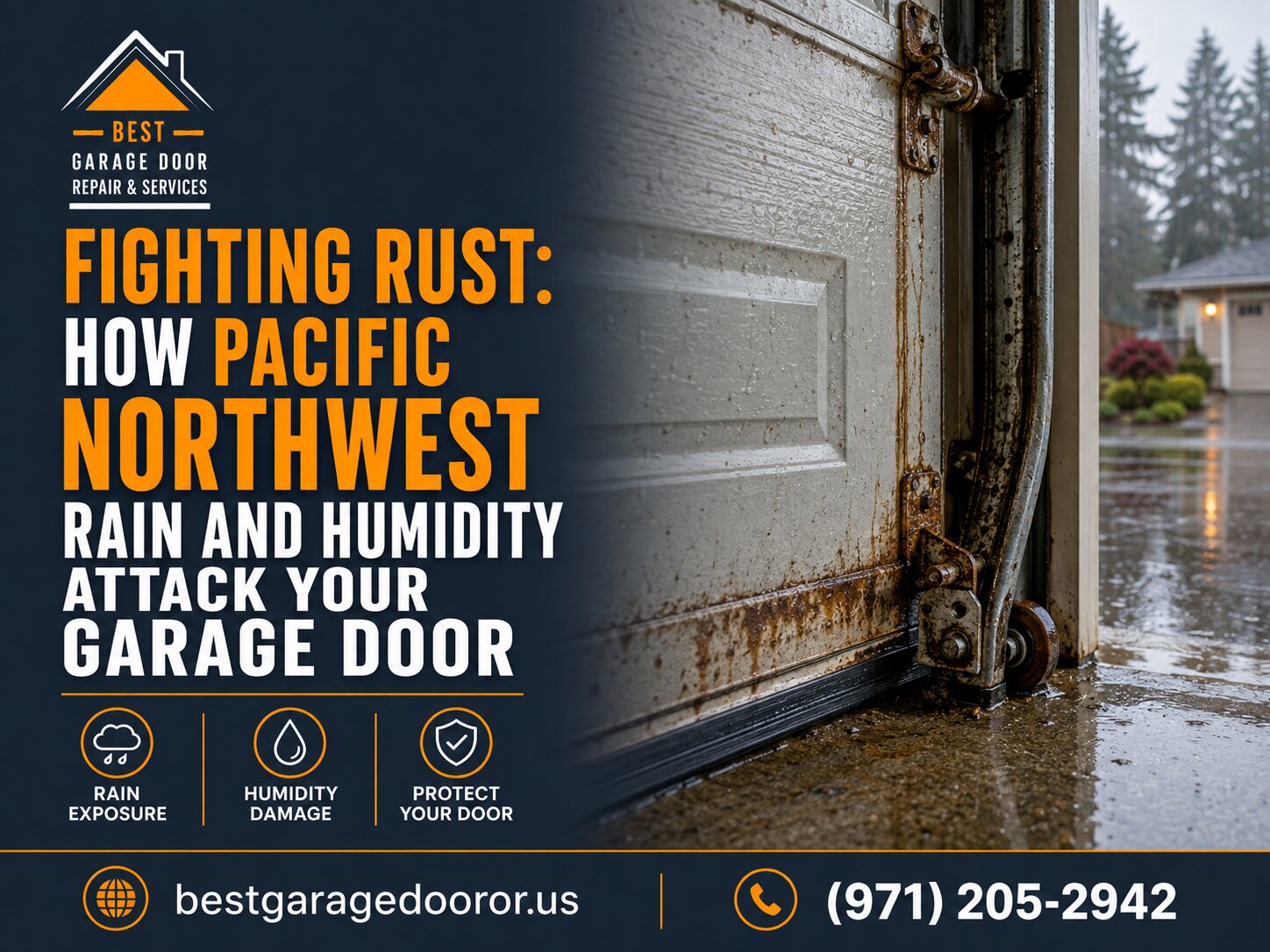
After more than a decade servicing garage doors across Hillsboro and Washington County, I’ve learned that rust is one of our biggest enemies. Our beautiful Pacific Northwest climate brings lush greenery and clean air, but it also delivers relentless moisture that silently destroys metal garage door components. The combination of high humidity and our famous Oregon rain creates the perfect storm for corrosion, and I’ve seen how quickly it can turn a perfectly functional door into a costly repair job.
Understanding how moisture attacks your garage door is the first step in protecting your investment. Let me share what our team has learned from thousands of service calls throughout the Willamette Valley, and show you exactly what’s happening to your door when the rain won’t stop.
Table of Contents
Why Does Garage Door Rust Happen Faster in the Willamette Valley?
Rust forms when iron or steel is exposed to both oxygen and water for extended periods. Our Willamette Valley climate provides both elements in abundance. We experience an average relative humidity of 70 to 80% throughout most of the year, and Hillsboro receives approximately 40 inches of rain annually, with most of it falling between October and May.
This constant moisture exposure means your garage door never truly gets a chance to dry out completely. Even on days when it’s not actively raining, the humidity keeps metal surfaces damp enough for oxidation to continue.
Which Garage Door Components Rust First?
Not all parts of your garage door are equally vulnerable. In my experience working throughout neighborhoods like Orenco, Tanasbourne, and AmberGlen, certain components consistently show rust damage before others. Knowing these vulnerable spots helps you catch problems early.
How Quickly Does Rust Damage Progress in Our Climate?
Rust damage accelerates exponentially once it starts. Surface rust appears within months on unprotected steel in our climate, but that’s just cosmetic. The real danger begins when corrosion penetrates deeper into the metal, compromising structural integrity and safety.
Our team tracks this progression regularly during maintenance visits across Washington County. What starts as light surface discoloration can become a serious safety hazard faster than most homeowners expect.
Spring Failure Rate
After Moderate Rust
Humidity Level During
Fall Through Spring
Hardware Replacement
Due to Corrosion
What Makes Oregon Humidity Different From Simple Rain?
Many Hillsboro homeowners assume that keeping their garage door closed during rainstorms prevents moisture damage. Unfortunately, ambient humidity causes just as much corrosion as direct rain exposure, and it’s impossible to avoid without climate control.
High humidity means water vapor saturates the air inside your garage. This vapor condenses on metal surfaces whenever the temperature drops, which happens every night in our mild climate. The result is a daily cycle of condensation that keeps metal components perpetually damp.
Common Rust Problems We See Throughout Hillsboro
Every neighborhood faces unique moisture challenges based on elevation, tree coverage, and drainage patterns. I’ve noticed distinct patterns in the types of rust damage we encounter in different areas of our service territory.
Does Garage Door Material Make a Difference?
Yes, door material significantly impacts rust resistance. Steel doors without proper coating rust rapidly in our climate, while aluminum and composite materials resist corrosion much better. However, even rust-resistant door panels contain steel hardware that requires protection.
I always recommend considering your door material carefully if you’re replacing an existing system. The upfront cost difference often pays for itself in extended lifespan and reduced maintenance needs.
Relative rust susceptibility in Willamette Valley climate conditions after 5 years
Practical Prevention Steps That Actually Work
Prevention is always cheaper than repair. After thousands of service calls, our team has identified specific maintenance practices that genuinely slow rust progression in our humid climate. These aren’t theoretical recommendations but proven strategies I’ve seen extend door lifespan by years.
When Should You Replace Rusted Components?
Surface rust is manageable, but structural rust requires immediate replacement. The challenge is knowing the difference. I teach homeowners a simple test: if rust flakes off easily and the metal underneath looks solid, that’s surface corrosion you can treat. If the metal feels thin, pitted, or crumbly, the structural integrity is compromised and replacement is necessary.
Springs deserve special attention because they’re under tremendous tension. Any rust on springs is a safety concern. We’ve responded to emergency calls where rusted springs snapped unexpectedly, and the results can be dangerous. If your springs show more than light surface discoloration, schedule an inspection immediately.
Cost Comparison: Prevention Versus Repair
Preventive maintenance costs a fraction of what you’ll spend on rust-related repairs. Our maintenance visits typically run $89 to $129 and can extend your door’s lifespan by years. Compare that to common rust repair costs we see regularly throughout the Portland Metro area.
Annual Maintenance
- Complete inspection and lubrication
- Rust prevention treatment
- Minor adjustments included
- Extends door lifespan 3-5 years
Rust Damage Repair
- Spring replacement from rust failure
- Bottom panel replacement
- Hardware and fastener replacement
- Track system repair or replacement
Special Considerations for Shute Park and Older Neighborhoods
Older homes in established neighborhoods like Shute Park often have garage doors installed before modern rust-resistant coatings became standard. These doors face accelerated corrosion because the original protective finishes have degraded over decades of exposure.
We also see more rust in tree-covered neighborhoods where leaves and organic debris trap moisture against door surfaces. The combination of shade, which prevents drying, and decomposing plant matter, which holds water, creates extremely corrosive conditions. If your home sits under mature trees, you’ll need more frequent inspections and cleaning to prevent rust damage.
How Ice Storms Accelerate Rust Damage
Our occasional ice storms create unique corrosion challenges. When freezing rain coats your garage door, it forms a layer of ice that can remain in contact with metal for days. As this ice slowly melts and refreezes through temperature cycles, it forces water into microscopic cracks and crevices in the protective coating.
The freeze-thaw cycle literally breaks open paint and galvanizing, exposing bare metal to moisture. I always recommend thorough inspections after ice events because this is when we discover new rust starting points that weren’t present before the storm. Catching these early prevents them from developing into major damage.
What About Garage Door Openers and Rust?
Opener mechanisms themselves rarely rust because they’re typically mounted on the ceiling away from direct moisture. However, the chain or belt drive systems can corrode, and the mounting brackets will rust if they’re steel rather than coated aluminum.
We see the most opener-related rust on the attachment points where the operator arm connects to the door. This pivot point experiences constant movement and vibration, which wears away protective coatings and exposes metal to our humid air. Regular lubrication of this connection point prevents most problems.
Protect Your Investment With Professional Care
Living in the beautiful Willamette Valley means accepting that moisture is part of our daily reality. Your garage door faces constant exposure to the humidity and rain that make our region so green and lush. But accepting our climate doesn’t mean accepting premature rust damage and expensive repairs.
Our team at Best Garage Door Repair & Service OR has spent years developing maintenance protocols specifically designed for Pacific Northwest conditions. We understand exactly how our weather attacks garage doors, and we know which prevention strategies actually work in real-world Oregon conditions. Regular professional maintenance catches rust in its early stages when treatment is simple and affordable, saving you thousands in replacement costs down the road.
Don’t wait until rust forces an emergency repair. Let us inspect your door, treat vulnerable areas, and create a customized maintenance schedule that protects your investment for years to come. We’re your neighbors here in Hillsboro, and we’re committed to keeping your garage door operating safely and reliably through every rainy season.


Leave A Comment