
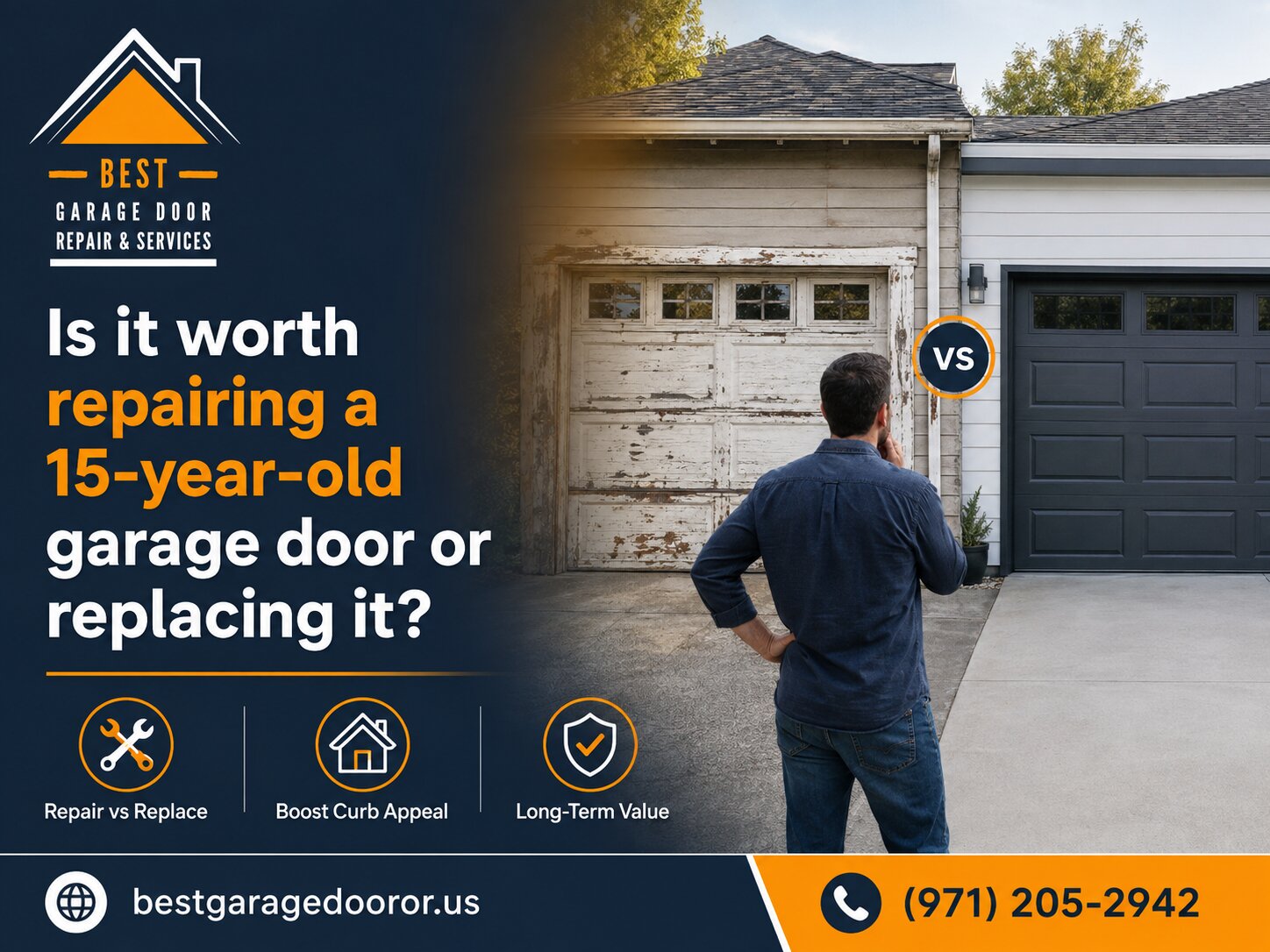
The decision to repair or replace a 15-year-old garage door depends on several factors, including the extent of damage, overall condition, and long-term cost-effectiveness. In most cases, if your door requires frequent repairs, shows significant structural wear, or lacks modern safety features, replacement is the smarter investment. However, if the issue is minor and the door has been well-maintained, a repair might extend its life for a few more years.
Table of Contents
Signs Your 15-Year-Old Door Needs Replacement
Garage doors typically last 15 to 30 years, meaning yours is right at the crossroads. Once a door reaches this age, certain warning signs indicate replacement is more practical than continued repairs.
If you’re experiencing three or more of these issues, replacement usually makes more financial sense than piecemeal repairs. The cumulative cost of fixing an aging door often exceeds the investment in a new, warrantied system with Best Garage Door Repair & Services.
When Repair Still Makes Sense
Not every 15-year-old garage door is ready for the scrap heap. If your door has been regularly maintained and the current problem is isolated, repair can be a cost-effective solution.
Simple component failures like broken springs, worn rollers, or a malfunctioning opener are typically affordable fixes that don’t require full replacement. If only one or two panels are damaged and the rest of the door remains structurally sound, panel replacement might be an option. Doors that have received annual professional maintenance throughout their life often perform reliably well into their twenties.
The key consideration is whether the repair addresses the root problem or simply delays the inevitable. A professional inspection can help determine if your door’s core structure and operating system remain viable or if you’re just postponing larger expenses.
Long-Term Cost Comparison
The smart choice comes down to a simple calculation. If repair costs exceed 50 percent of replacement cost, or if you’re facing multiple repairs within a short timeframe, replacement delivers better value.
New garage doors come with warranties covering parts and labor for several years, eliminating surprise expenses. Modern doors also offer improved insulation that can reduce heating and cooling costs by up to 20 percent in attached garages. Enhanced safety features protect your family from accidents that older doors without auto-reverse or pinch-resistant designs can cause.
Additionally, a new garage door can recoup 85 to 90 percent of its cost in increased home value, making it one of the highest-return home improvements. If you plan to sell within the next five years, replacement becomes even more attractive from a financial standpoint, as discussed in our Blog.
Leave A Comment